Monday, 28 May 2012


Sunday, 11 March 2012
Apple's new iPad: The analysts weigh in

RBC Capital's Mike Abramsky: 'New iPad' - Incremental? Really? We would argue it will maintain Apple's Tablet dominance, especially when considered in context with Apple's powerful ecosystem (iTunes, iTunes Store, iCloud, iOS, App Store, carrier/store distribution, etc)... The new iPad raises the performance bar, with the highest resolution screen on a tablet and the A5X processor offering 4x performance vs. the NVIDIA Tegra 3, while 4G LTE eliminates one of iPad's biggest missing features. Estimated calendar 2012 iPad sales: 62 million
Deutsche Bank's Chris Whitmore: Lapping the competition again; iPad positioned to dominate the category. We believe competitors (Android and Windows) will have trouble matching the price-performance specs of the current iPad product lineup and AAPL should continue to dominate the category... Specifically, we believe both Android and forthcoming Windows tablets will have difficulty competing with the iPad on a price-performance, application support and ecosystem standpoint. We view our 60M iPad estimate for CY12 as beatable.
Goldman Sachs' Bill Shope: The iPad story gets another boost; raising target price. We believe the new iPad and the lower price point for the iPad 2 will enable Apple to continue its momentum and tablet market dominance, and we continue to expect rapid installed base growth in 2012 and beyond. Nearer term, the mid-March availability of the new iPad could allow channel fill to boost March quarter shipments relative to expectations. Overall, we expect the new iPad and the lower priced iPad 2 to encounter robust demand and we are raising our iPad estimates as a result. We now forecast iPad units of 53.4 million in FY2012, 67.7 million in FY2013, and 80.0 million in FY2014 up from our prior estimates of 51.5 million, 64.0 million, and 75.4 million. Target price: $660 (from $600)
CitiGroup's Richard Gardner: iPad 3 Keeps Apple Clearly Out in Front of the Pack; Reit Buy. With the addition of so many new features at the same prices as iPad 2, Apple has once again made it nearly impossible for competitors to undercut iPad on price and still earn a profit. While there are cheaper tablets on the market, they do not offer the screen size, screen resolution, ease of use or wealth of apps (both Apple-branded and third party) that iPad does. iPad 3 leaves us convinced that Apple will continue to dominate the tablet market throughout 2012. ... iPad 3 clearly costs more than iPad 2. We believe Apple has added ~$75 in cost to the platform, which equates to ~10 percentage points of negative GM impact. However, the initial impact on overall company GM is less than a percentage point and should be more than offset by strong iPhone momentum in 1CQ12.
J.P. Morgan's Mark Moskowitz: The Gap Widens: Apple Adds to Tablet Lead with Improved Chip, Retina Display, and LTE Capabilities. We think the iPhoto update is another step towards making the iPad the digital hub for the mobile user. Next, having Microsoft's Office on the iPad would take the device to another level. We think that Office on the iPad is likely a 2013 event, and one that will likely make the iPad a full-fledged productivity device rather than the content-heavy consumption device of today. In our view, the incorporation of Office on the iPad could help take enterprise adoption of tablets north of 15%, versus 7-8% currently. Estimated iPad sales for calendar 2012: 55.7 million. For 2013: 69.7 millon

Canaccord Genuity's Mike Walkley: New iPad extends tablet lead. We believe the new iPad has raised the bar relative to competing tablets with impressive hardware specifications, competitive pricing, and the leading software ecosystem that includes over 200k iPad-specific applications. ... In addition, we believe Apple's pricing of the new iPad ($499 for WiFi-only, $629 for 4G base models) and iPad2 (reduced to $399 for WiFi-only, $529 for 3G base models) will enable Apple to maintain dominant share of the growing tablet market. Reiterate $665 price target.
Morgan Stanley's Katy Huberty: Cheaper iPad 2 Drives Incremental Demand With Minimal Gross Margin Impact. The new iPad, incorporating many key features first introduced by iPhone 4S last October, will drive strong demand. Our US survey in December indicated demand for 30 million iPads in the US and 81 million globally in 2012, roughly in-line with production capacity Apple's suppliers are preparing this year. Apple's iPad shipments in the four quarters post the iPad 2 introduction were 2.3x higher than the prior four quarters. For comparison, our model conservatively implies 1.2x unit increase post this year's introduction. The same 2.3x increase would suggest about 90 million units in CY12, much higher than our model of 51 million.
Jeffries' Peter Misek: iPad 3 announcement as expected. Difference vs. expectations: the chip appears to be a dual-core with quad-core graphics vs. our expectation of a quad-core chip. We see this as more a difference in chip architecture and expect performance to be similar to what we thought with the quad-core. Also, the new iPad does not have Siri, which we find perplexing. We think this could be a software update in the future. Finally, the new product will be called "the new iPad" rather than the iPad 3. We think this implies that future updates will mainly be driven by software rather than hardware, so Apple is switching its naming practices to be closer to those of the Macs and iPods.
CSLA's Ari Silver: Extends first-mover advantage. Apple's iPad event held few surprises but still highlights its first- mover advantage and underscores competitors' challenges in trying to undercut Apple and still turn a profit. We argued for an LTE iPad since June 2011, and the LTE functionality should serve as a precursor for iPhone5 which we fully expect to incorporate both FD- LTE (Verizon, etc) and TD-LTE (China Mobile). The extent to which cellular connected iPad sales grow as a percentage of total shipments will support higher iPad gross margin (we estimate 1,100 bp difference between the two). Of course, users would need to pay $30+ for monthly data plans of 2GB and up. We believe iPad3 kicks off a year of major product cycles for Apple that will usher in a completely redesigned iPhone, a smaller tablet in 2H12, and a Macbook Air refresh. We see a full-blown Apple TV as a 2013 event, not 2012. Price target: $615 (from $550).
Morningstar's Michael Holt: The new iPad: Apple Extends its Tablet Lead. Apple's short-term momentum looks unstoppable. Triple-digit growth rates will slow, but as we look five years down the road, some of the most important drivers of valuation include estimating how big the addressable market for smartphones will grow and how much share Apple can carve off. Once share is secured, we believe users Fiscal Year: Price/Earnings become tethered to the Apple ecosystem that will drive their purchasing decisions for years to come.
Sterne Agee's Shaw Wu: Announces new 4G LTE capable iPad; cuts iPad 2 pricing; iPhoto gets more social. We view 4G LTE wireless as arguably the most important new feature. The reason is that it is substantially faster (up to 10x more at 73 megabits vs. 7.2 megabits for 3G) and AAPL's first mobile device to incorporate it. In addition, unlike competitors, AAPL is delivering strong battery life (9 hours using 4G LTE and 10 hours on 3G). We do not believe this can be easily replicated as AAPL is unique in the industry with its core ownership of key intellectual property including battery chemistry, systems design, and software.
Barclays' Ben Reitzes: Software Ecosystem Stands Out With the Faster iPad Line. While many will focus on the features of the new iPad vs. expectations, we believe that Apple's software ecosystem is the key driver of sales of iOS devices. On this front, Apple did not disappoint. Like the iPhone in smartphones, the iPad is the most usable tablet in terms of software, apps and access to the cloud. We believe consumers understand this value proposition, which helped propel iPhone 4S to record levels last quarter. As a result, we believe that today's announcement continues this trend – as Apple's value proposition could bring upside to iPad ASPs and unit sales throughout the year. Maintains $710 price target.
Evercore Partners' Robert Cihra: New iPad as Expected and We See Yet Another in September. New A5X processor doubles graphics performance and we think shrunk to 32nm from prior 45nm, but we continue to believe a new 28nm quad-core "A6" will be available ~Sept, setting up the prospect for yet another mid-cycle flagship refresh. Today's iPad timing otherwise kept in line with Apple's annual cadence post initial Jun-10 intro and iPad 2 refresh Mar-11. Reiterates $650 price target.
Merrill Lynch's Scott Craig: iPad, Apple TV a nice evolution, not a revolution. We view the launch of the new iPad and Apple TV as a continued evolution of the product life cycles, as opposed to a revolution. The iPad, clearly the more important of the two announcements to investors, has a pretty similar form factor, with enhanced display (new retina display) and networking (4G/LTE capability; optional), among other features. While the price points remain the same for the new iPad, the iPad 2 (16GB versions only now) will be sold for $100 less than new iPad 16GB. Similar to iPhone buying trends, we believe consumers will gravitate toward the newer version. Given the mid-March launch, this may pull forward into the March quarter a few million units of iPad demand (we estimate each 1 million units is $0.10+ of EPS). Maintain Buy on valuation, product trends, gross margin upside, and Street EPS revisions.

Piper Jaffray's Gene Munster: New iPad Impressive, [Long Term] Tablet Thesis Suggests iPad Numbers Too Low. Similar to the company's strategy with iPhone, Apple will continue to offer the 16GB iPad 2 at $399 for the wi-fi only version and $529 for the 3G version. Given the 8" Kindle Fire ($199) and several lower-priced 10" Android Tablets, we see the price reduction of the iPad 2, and the lower entry-level price for the iPad family, as a strong defensive move from Apple. Moreover, we do not see it cannibalizing iPad HD sales; rather, it expands Apple's addressable market in the rapidly growing tablet space. Estimated calendar 2012 iPad sales: 60 million.
Forrester's Sarah Rottman Epps: The New iPad: How A Gut Renovation Masquerades As Incremental Innovation. Compared with iPad 2, it has a nicer camera, a video camera, dictation input, and 4G, while still squeezing out 10 hours of (Wi-Fi) battery life. It's a wee bit thicker and an ounce heavier. And yet, in my conversations with numerous reporters over the past few days, the theme they kept bringing up was "incremental innovation": Will the next iPad be innovative enough to maintain Apple's momentum? If the iPhone 4S is a case study, the answer for consumers is a resounding "yes." We expect tablets, led by the iPad, to reach 60.7 million US adults by the end of the year, or 19% of the US population.
Credit to : http://tech.fortune.cnn.com
Top 10 Most Popular Male Singers In 2012
Singing has become so famous profession now a days. We have seen lot of singers in previous decade which made their best to entertain the world. Every year we see many new faces to come in this profession and they show their talent to their fans.Now the previous year 2011 has gone which discovered a lot of new young and energetic singers that rolled out in our hearts. There is not a shortage of male singers but some have become so popular in this year. We are listing here the Top 10 Most Popular Male Singers In 2012.All the singers are still performing in big concerts, you will love them and this list too.
10. Justin Bieber

Justin Bieber was born in March 1, 1994.He is a Canadian pop singer. He is not only a singer he has also shown his talent in making his own lyrics and in acting too .Justin Bieber is young and energetic singer which is so popular among the Teen. He has got this popularity in his young age.He was discovered in 2008 by Scooter Braun. His Debut album was “One Time” which was released in 2009 which peaked him up. Never Say Never was released on February 11,2011 which made the gross business of 30.3 million dollars.His second album was released in November 2011 “Under The Mistletoe” This album became so popular among the people and in the first week 210,000 copies were sold. Now he is releasing his Third Album “Believe “will be released in March. Justin has believed about the success of this album.
9. David Guetta

David Guetta was born in 7 November 1967.He is a French music producer and also a DJ.This talented guy is so famous now a days and has released many albums .His first album was ‘Just a Little More Love” in 2002.He has sold over Three million albums and 15 million singles worldwide. His one of the best studio album is” Nothing But The Best “that was released in 30 August 2011. Where them Girls At ,Little Bad Girl and Without You were his popular singles featuring Nicki Minaj, Flo Rida, Ludacris, Taio Cruz and Usher. David Guetta is at number 9th position.
8. Pitbull

The date of birth of this beautiful voice is 15 January 1981. He is an American Singer.He is also a song writer and record producer.His Debut album was Kings of Crunk .He has released many of albums but the song “Give Me Everything” was included in top 20 of the Billboard Hot 100 and this song is hearing now a days in clubs and discos. His recent highly grossing album is “Planet pit”. Pitbull has ‘Hey Baby’ “Give Me Everything” singles in his career. He is ranked at number 8th position.
7. Jason Derulo

Another American singer is included in this list that is Jason Derulo. which is a multitalented singer.He is also a songwriter, actor, and dancer.His debut single was “Whatcha Say” that was released on Aungust 4, 2009. The song “Hide and Seek” was at number 54 on the Billboard Hot 100 in late of the August and ranked number 1 in November 2009. His recent single “Don’t Wanna Go Home” which was released on May 20, 2011 hold the number one position in UK and in the top 5 in Australia.He has a bright career and is becoming so famous in the music industry.He has planned to take a music tour of Uk in February 2012.
6. Chris Brown

Chris Brown is an American entertainer which launched his debut album “Chris Brown” in his age of 16. The single “Run It” topped the Billboard Hot 100.two million copies of this album was sold. His recent album “F.A.M.E” which was released on 18 March 2011 ranked at number 1 position in UK Billboard 200 chart.The sales of this album reached the 270,000 figure.The famous songs of Chris are WITH U, FOREVER and SHE AIN’T YOU.The album Fortune will be release on May 8, 2012.This talented singer is ranked at number 6.
5. Taio Cruz

Taio Cruz is a British singer.His debut album was released in 2008 that was Departure.He is not only a singer but also a record producer, occasional rapper and entrepreneur.His recent album “TY.O “is releasing in march 2012. His two famous singles “Hangover” and “Troublemaker”has released in 2011 and got so much popularity.He is expecting a lot from the new year about his success. Taio Cruz is at number 5th position.
4. Adam Levine

Adam Levine is the American singer. He belongs to Los Angels.He is a guitarist for the band Maroon 5. His famous song was “Gotten” which was released in April 2010.He also featured for his band’s song “She Will Be Loved”. Adam Levine will attract you and moves like Jagger, as the band will rolls on the top position by their album.Adam Levine band has created his album at the end of 2011 in which Adam is at the front man of his band.
3. Drake
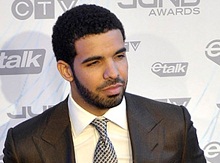
Drake is the Canadian singer. In 2009 he completed his first album “Thank Me Later”. It was released in June 15,2010 and placed at number one on the Billboard 200.He has worked with many other famous Artists. His recently launched album was Take Care,which was released in November 17,2011. His famous songs Dream Money can Buy, Marvin,s Room and the Motto With Lil Wayne, will topped him up .He is at number 3rd position.
2. Usher

An American singer and dancer Usher is so famous now a days.He is at number 2nd in this list.He is a good entertainer on the stage. He is holding the title King of R&B.His fifth single“Without You” is so famous among the people. After the popularity of Raymond Vs Raymond album.Usher is not stopping his efforts to reach the top of popularity and still winning the hearts of his fans.
1. Bruno Mars

Bruno Mars another American singer is listed at the top in this list.He is so talented singer with his beautiful voice is so famous among the people and they love him.He started work on music in his early age.His single “Lighters” was released in Sep 16 2011.The nomination of six Grammy awards for Bruno Mars lead him to take the first position in most popular male singer list.
Top 10 richest people in the world - 2012
1. Carlos Slim
Mexican business magnet with networth exceeding $69 billion.

2. Bill Gates
Networth - $61 billion, founder of Microsoft Corp.

3. Warren Buffett
$44 billion, founder of Berkshire Hathaway Inc.

4. Bernard Arnault
Worth $41 billion, LVMH Moet Hennessy

5. Armancio Ortega
At position five in 2012 worth at least $37.5 billion, Zara International

6. Larry Ellison
At position six with networth exceeding $36 billion, founder Oracle Corp.

7. Eike Batista
Networth $30 billion, mining and oil industries.

8. Stefan Persson
Networth - $26 billion, owner of clothing chain H&M.

9. Li Ka-shing
At position nine having networth $25.5 billion invests in diversified industries.

10. Karl Albrecht
Networth $25.4 billion, owner of discount supermarket chain Aldi Group.

Tuesday, 21 February 2012
Tired of Feeling Bad? The New Science of Feelings Can Help
Is your emotional style getting you down? Research finds the neural basis of your responses to life-and how you can change them.
If you believe most pop psychology, you probably assume that most of us react to life events in just about the same way—there is a grieving process, a sequence of events when we fall in love, a standard response to being jilted.
But these one-size-fits-all assumptions are not true. In decades of research into the neurobiology of emotion, I’ve seen thousands of people who share similar backgrounds respond in dramatically different ways to the same experience. Why does one person recover quickly from divorce while another remains mired in self-recrimination or despair? Why does one sibling bounce back from a job loss while another feels worthless for years? And why can one father shrug off the botched call of a Little League umpire who called his daughter out while another leaps out of his seat and screams at the ump until his face turns purple? The answer that has emerged from my research is that these differences reflect what I call Emotional Style—a constellation of reactions and coping responses that differ in kind, intensity, and duration. Just as each person has a unique fingerprint and a unique face, each of us has a unique emotional profile.
That may seem as obvious as stating that everyone has a unique personality. But personality is not grounded in identifiable neurological mechanisms; it has not been traced to specific patterns of neural activity in the brain. This is where the theory of Emotional Style breaks new ground: through neuroimaging and other methodologies, I have traced Emotional Style—and, specifically, the six components that make it up—to patterns of activity throughout the brain.
In making those discoveries, I have found that, in contrast to the longstanding scientific orthodoxy, Emotional Style arises partly from activity in regions involved in cognition, reason, and logic—functions that textbooks tell us are as unrelated to emotions as apples are to squid. That has come as a shock to defenders of the view that cognition—which many psychologists and neuroscientists consider the most exalted human capacity—and emotion (viewed as a lesser, almost animalistic trait) run on separate, mutually independent brain circuitry: the former in the “highly evolved” frontal cortex and the latter in the limbic system, which in humans is not much different from that of other animals. In showing that cognition and emotion are not so separate after all, these discoveries have rehabilitated emotion. From a behavior that was, as recently as the 1970s, studied for the most part only in rats and other lab animals, human emotion has now assumed as important a place in neuroscience as thinking.

Locating the bases of emotion at least partly in the brain’s seat of reason has several practical implications. None is more intriguing than this: it is possible to transform your Emotional Style through systematic mental practice.
It is hard to exaggerate what a break this is from the conventional wisdom in psychology and neuroscience. From the earliest days of brain mapping—determining which regions are responsible for which functions—neuroscientists traced feelings and thoughts to structures that were barely within hailing distance of each other. The limbic system deep in the brain, including the amygdala and hippocampus, seemed to be the brain’s holy terror of a 2-year-old, the site of anger, fear, and anxiety, as well as positive emotions. The frontal cortex, just behind the forehead, was the exalted thinker, where forethought and judgment, reason and volition, attention and cognition came from. As recently as the 1980s, neuroscientists focused almost exclusively on cognition and the other functions of the frontal cortex; emotions were deemed of so little interest that neuroscience left them to psychology.
The first crack in this wall came in the 1980s. The neurobiology of emotion was still a backwater, but a few scientists were beginning to pay more attention to feelings, particularly in the context of depression. Inspired by one of them, I launched experiments using electrodes to measure brain activity in people whose emotional state we manipulated in the lab. By showing them upsetting, fearful, or uplifting videos and photos, for instance, and monitoring their response, we discovered that how well and how quickly a person is able to bounce back from adversity has nothing to do with activity in what scientists identify as the brain’s emotion centers. Instead, the ability to vanquish feelings of grief, anger, or other negative emotions reflects activity in the prefrontal cortex. In this research, we found that Resilience—one of the six elements of Emotional Style—is marked by greater left versus right activation in the prefrontal cortex: a lack of Resilience comes from higher right prefrontal activation. The amount of activation in the left prefrontal region of a Resilient person can be 30 times that in someone who is not Resilient.

Almost immediately, we faced a new question: what does the prefrontal cortex do when it comes to emotion? After all, the prefrontal cortex was, and is, known to be the site of the highest of higher-order cognitive activity, the seat of judgment, planning, and other executive functions. How could it possibly play a role in a key element of our emotional lives?
One clue came from the large bundles of neurons running between certain regions of the prefrontal cortex and the amygdala. The amygdala is involved in, among other things, negative emotion and distress, snapping to attention and activity when we feel anxious, afraid, or threatened. Perhaps the left prefrontal cortex inhibits the amygdala and, through this mechanism, helps to facilitate rapid recovery from adversity.
In a major experiment testing this idea, my colleagues and I fitted volunteers with electrodes to measure their brain activity and then showed them 51 pictures on a video monitor. One third of the pictures depicted upsetting images such as a baby with a tumor growing out of his eye; one third showed something happy, such as a radiant mother embracing her infant; one third showed a neutral scene such as a nondescript room. Sometimes during or after a picture, the volunteer would hear a short burst of noise that made him blink involuntarily. A large body of research had established that when people are in a negative emotional state, these blinks are a little stronger than when we are in a neutral emotional state, and much stronger than in a positive state.

What we found, in a nutshell, is that people with greater activation on the left side of the prefrontal cortex recovered much more quickly even from the strongest feelings of disgust, anger, and fear evoked by the images. From this, we inferred that the left prefrontal sends inhibitory signals to the amygdala, instructing it to quiet down. Activity in the left prefrontal cortex actually shortens the period of amygdala activation, allowing the brain to bounce back from an upsetting experience.
Thanks to MRI, we now also know that there is a second element at play: the more axons you have connecting one neuron to another between the prefrontal cortex and the amygdala, the more resilient you are. The less of this “white matter”—that is, the fewer the highways leading from the prefrontal cortex to the amygdala—the less resilient you are.
In other words, both prefrontal-cortex activity and the number of pathways sending calming signals to the amygdala determine just how easily a person will bounce back from adversity. Through these two mechanisms, our “thinking brain” is able to calm our “feeling” self, enabling the brain to plan and act effectively without being distracted by negative emotion—not a bad working definition of Resilience.
This is the kind of statement that makes people worry: Oh great, I must not have many connections between my prefrontal cortex and amygdala, so I’m doomed to melt into a neurotic puddle every time I experience adversity. And indeed, for decades, neuroscientists assumed that the adult brain is essentially fixed in form and function.
We now know that this picture is wrong. Instead, the brain has a property called neuroplasticity, the ability to change its structure and function in significant ways. The brains of virtuoso violinists, for example, show a measurable increase in the size and activity of areas that control the fingers, and the brains of London taxicab drivers, who learn to navigate the complicated network of streets in that city, show a significant growth in the hippocampus, an area associated with context and spatial memory. But the brain can also change in response to messages generated internally—in other words, to our thoughts and intentions. In my favorite example of how “mere” thought can change the brain in fundamental ways, scientists led by Alvaro Pascual—Leone of Harvard University had volunteers imagine practicing a simple five-finger keyboard piece over and over for a week. Result: the region of the brain’s motor cortex that controls the fingers of the right hand expanded. Thinking, and thinking alone, had increased the amount of space the motor cortex devoted to a specific function.
When it comes to your Emotional Style, we know that changes to the neural structure of brain are possible. We don’t know exactly how much plasticity the brain has, but we do know that some neurally inspired interventions—forms of mental training that target patterns of brain activity—can work. Mental activity, ranging from meditation to cognitive-behavior therapy, can help you develop a broader awareness of social signals, a deeper sensitivity to your own feelings and bodily sensations, a more consistently positive outlook, and a greater capacity for Resilience. Do you feel yourself to be too negative in outlook? Pay heightened attention to the ways in which you can be more generous and upbeat, through processes therapists call “well-being therapy.” Are you very Self-Aware, so much so that your internal chatter threatens to take over your day-to-day life? Practice observing your thoughts, feelings, and sensations nonjudgmentally moment by moment.
This practice, known as “mindfulness meditation,” is one of the most effective tools for changing our Emotional Style. In patients with depression—whom we call “Slow to Recover” on the Resilience scale—every disappointment and setback is shattering. These patients need to increase activity in the prefrontal cortex (especially on the left side), to strengthen the neuronal highways between it and the amygdala, or both. Mindfulness meditation cultivates greater Resilience and faster recovery from setbacks by weakening the chain of associations that keep us obsessing about and even wallowing in a setback. It strengthens connections between the prefrontal cortex and the amygdala, promoting an equanimity that will help keep you from spiraling down. As soon as your thoughts begin to leap from one catastrophe to the next in this chain of woe, you have the mental wherewithal to pause, observe how easily the mind does this, note that it is an interesting mental process, and resist getting drawn into the abyss.
If you instead wish to move toward the Slow-to-Recover end of the Resilience dimension—perhaps you find you are not taking in the pain of others or yourself carefully enough—then you need to weaken connections between the prefrontal cortex and the amygdala. One strategy is to focus intently on whatever negative emotion or pain you are feeling, or the pain of someone you know. This can help sustain the emotion, at least for a time, and increase activation of your circuitry that is involved in pain and distress.
The goal here is not to go from one extreme to the other: I’m not trying to change you from Slow to Speedy (or vice versa) on the Resilience scale, or from Cassandra into Pollyanna in your Outlook. Changing the patterns of activity and even connectivity that underlie the facets of Emotional Style is highly personal. It depends on what works for you.
Credit to : http://digg.com
Father-Son Lessons - The 7 Most Important Things A Father Could Teach A Son

A real man knows how to empathize but stay true to his values at the same time."
Whether or not you have kids, you should take a minute and identify some of the core values of fatherhood. Because when you do become a dad, you'll have to pass down those values to your children. We asked you to weigh in on the most important lessons a father can teach a son. A ton of you answered. Here are the best replies. Responses have been edited for clarity.
1. Look People In The Eye
"I tell my three boys that if you want to be taken seriously in a room full of adults, always look people in the eye when you speak to them and always shake their hand in a firm, positive manner."
-Patrick
2. Be A Loving Husband
"Let your son witness you hugging your wife daily and let him hear you telling your wife you love her. Young boys use these experiences as examples for how to model their own relationships for the rest of their lives."
-Aaron J. Zach
3. Be compassionate but not a pushover
"One of the most important things a man should teach his son is how to be compassionate but not a pushover. A real man knows how to empathize but stay true to his values at the same time."
-Peter Low
4. Be Open-Minded
"Open-mindedness. Perhaps one of the most important principles we can teach our kids is how to think for themselves so they can develop into individuals, not mini versions of their dads, as cool as that sounds."
-Daniel Pawlak
5. Don't Expect The Worst In People
"A man should teach his son to treat others with kindness and respect. Every person deserves a clean slate and a kind reception when you meet them for the first time. Whether they then damage that perception is up to them."
-Zach
6. Expect to work hard
"A man should teach his son discipline and hard work so that he can carry through and be ready for life when he grows into the outer world. These things are to be taught by way of leading by example, focusing on first things first and helping him recognize how important it is to help others."
-Bruce
7. Take Nothing For Granted
"A man should teach his son to question everything and take nothing for granted. The son should also learn to respect women and how to clean up after himself. He should teach his son to be responsible and not to take any crap from anybody."
-J.J.
Read more: http://www.askmen.com
Monday, 20 February 2012
Top 10 Sexiest Mens Watches 2012
*This page features the best men’s watches on the market for 2012 – over and under $500.* Looking to treat the man you love to a special gift? Or looking to treat yourself to a nice watch? Besides a sexy fragrance, nothing adds sex appeal to a man like a sexy watch. A nice watch suggests class, style, sophistication… and not to mention, it’s a quick ego booster. We did some research in 2012 to find the hottest watches on the market for men.

Here are the top 10 sexiest watches for men for 2012 ...
10 – Emporio Armani Silicone
Chrono Men’s Watch

This is one of Armani’s most popular watches – it comes in several different colors but the black is probably the most attractive.
9 – Nixon
Chronograph Men’s Watch

Nixon watches are great for casual wear. They’re rugged, masculine and super sexy.
8 – Victorinox Swiss Army Classic
Chrono Men’s Watch

You can never go wrong with a Swiss Army Classic. As the name suggests, it’s a classic.. and will never go out of style.
7 – Burberry Stainless Steel
Chrono Men’s Watch

The Burberry Stainless Steel Timepiece is an awesome choice. Something about all silver screams classy. The blue face is pretty hot, too.
6 – Movado BOLD Chrono
Chrono Men’s Watch

This is the chrono version of the new Movado bold. This style beats the signature look… hands down.
5 – Movado 800 Series
Chrono Men’s Watch

As seen on Tom Brady and Derek Jeter.. The sports studs added sex appeal to the already sexy Movado 800 series. Love it!
4 – Gucci Men’s I-Gucci
Digital Men’s Watch

The I-Gucci is Gucci’s big seller. Only Gucci can make digital …sexy.
3 – Tag Heuer Aquaracer
Chrono Men’s Watch

We love Tag watches. The Aquaracer is a popular choice. It’s sporty yet dressy and goes with just about everything.
2 – TAG Heuer Carrera
Chrono Men’s Watch

Carreras are on fire. As seen on Leonardo Di Caprio, this is one of the most popular Carreras both online and in stores. Pictures don’t it justice (the red isn’t as loud as it appears in pictures).
1 – Omega
Seamaster Planet Ocean

The Seamaster Planet Ocean is Omega’s latest Seamaster diver watch and… it’s a big hit.
Credit to : http://www.heartbait.com
Subscribe to:
Posts (Atom)