Followers

Sunday, 8 January 2012

Fewer heart attacks after weight-loss surgery: study

Reuters


Obese people who had weight-loss surgery were less likely to later suffer a heart attack or stroke, or to die from one, compared to people who did not have the surgery, according to a Swedish study. The findings, published in the Journal of the American Medical Association, come from a study of more than 4,000 obese people treated at 500 surgery departments and health care centers in Sweden. Between 1987 and 2001, half of those people opted for bariatric or weight-loss surgeries, most often stomach stapling, and the other half were treated with routine care, including advice on lifestyle changes. "Compared with usual care, bariatric surgery was associated with reduced number of cardiovascular deaths and lower incidence of cardiovascular events in obese adults," wrote lead researcher Lars Sjostrom at the University of Gothenburg.

The patients were followed for more than a decade, on average, to see how many of them suffered a heart attack or stroke. In total, 199 who underwent bariatric surgery had their first heart attack or stroke, and 28 died as a result. By comparison, 234 people who decided against the surgery suffered a heart attack or stroke, and 49 died. "This is very beneficial in filling that gap -- we just have so little long-term data," said Ted Adams, a researcher who has studied bariatric surgery and health outcomes at the University of Utah School of Medicine in Salt Lake City. Adams, who wasn't involved in the study, added that the results will help inform doctors and patients about the surgery's long-term consequences. The study doesn't prove that weight-loss surgery cuts the risk of heart disease, and some experts say there are still many questions about its benefits and risks.

When the researchers took into account the initial health differences between people who did and did not get surgery, they found that after the surgery, patients were about 30 percent less likely to have a first-time heart attack or stroke than non-surgery patients, and half as likely to die from one. Study participants who had weight-loss surgery started out with an average body mass index (BMI) of about 42. They lost an average of 16 percent of their starting weight over the 15 years after the procedure. By contrast, the comparison group, which started out a bit lighter, didn't consistently lose or gain weight over time. About 13 percent of the surgery group had complications after the operation and how much weight patients lost in either group wasn't tied to their chances of having a heart attack or stroke, Sjostrom and his colleagues wrote.

One reason is that the surgery has other health benefits independent of the amount of weight loss, including a reduction in diabetes, which could ease heart risks -- all things to consider when deciding whether to have surgery, Adams said. Other doctors said that given the uncertainty that still exists about the procedures, the fact that the heart benefits are small and that some patients regain weight, those without other health risks might want to carefully weigh having the surgery done. "We don't really know the full spectrum of long-term benefits and risks for these operations," said Edward Livingston, a professor at the University of Texas Southwestern Medical Center in Dallas who wrote a commentary published with the study.

I never know where the line is...

Obama to businesses: Bring jobs home

By Caren Bohan and Jeff Mason | Reuters


President Barack Obama kicked off an effort to encourage businesses to keep jobs at home instead of outsourcing them overseas, as he rolled out a new election-year theme on Saturday aimed at courting middle-class voters. In his weekly radio and video address, Obama previewed an event he will hold next week with business executives to highlight the advantages of investing in the United States. "We'll hear from business leaders who are bringing jobs back home and see how we can help other businesses follow their lead," Obama said.

The White House forum on "Insourcing American Jobs" will be held on Wednesday. Executives from more than a dozen companies will attend, including padlock maker Master Lock, furniture company Lincolnton Furniture, software application developer GalaxE Solutions, and chemicals company DuPont. The emphasis on keeping U.S. jobs at home is in line with a populist economic message championed by Obama that could play well with union workers, whose support the Democratic president will need to win re-election in November.

The White House sees an increasing trend of companies deciding to "insource" jobs and invest in U.S.-based plants and factories, according to a White House official. It wants to encourage more businesses to follow that trend, the official said. The practice of U.S. companies moving jobs to foreign countries such as India and China, where labor is cheaper, is a source of concern to many U.S. workers. The issue resonates strongly in Midwest industrial states such as Ohio and Michigan that have been hard hit, not only by the 2007-2009 economic crisis, but also by years of shrinkage in the manufacturing jobs sector. Many of those states are battlegrounds that are vital to Obama's re-election hopes.

Republicans vying to challenge Obama in November, including front-runner Mitt Romney, have hammered him over his economic stewardship. They contend that his regulatory policies, including new rules for Wall Street and the overhaul of the healthcare system, have discouraged investment. They also say his fiscal stimulus measures have not succeeded in bringing down high unemployment. But the White House was encouraged by the December jobs report, released on Friday, which showed a drop in the jobless rate to 8.5 percent, its lowest level in nearly three years. "We're heading in the right direction. And we're not going to let up," Obama said.

7 teens charged with beating classmate unconscious

By KELLI KENNEDY | AP


Seven central Florida teenagers were arrested after authorities said they punched and kicked a 13-year-old until she was unconscious while on a school bus. The victim told authorities that Friday was her first time riding the bus and no one would let her sit down. About 75 children were riding the bus bound for a middle school in Ocala, a rural city north of Orlando. The victim said someone threw a shoe at her and she threw one back, according to an arrest report.

One girl allegedly asked students if they wanted to hit the victim, then instructed the teens to form a circle and began hitting and kicking the victim. Several witnesses said they saw the girl fall to the floor and "appear to have a seizure and pass out," according to the arrest report. The victim, who is not being identified, was taken to the hospital and diagnosed with a concussion, severe bruising on her head and muscle spasms. Seven teens, ranging in age from 12 to 15, were charged with battery and disorderly conduct. The Associated Press is not identifying the suspects because they are minors.

The school's bus driver said he saw the fight and pulled the bus over to intervene. The fighting ceased, so he continued driving, but he told authorities the fight broke out again and he couldn't control it so he drove to a nearby school and called officials. Authorities interviewed all the students on the bus. Ten students said they saw the seven "commit battery upon the victim as a group," according to the report. One suspect admitted kicking the victim, but said it was an accident. A few claimed they hit her and several others denied it.

Deputy Shannon Wiles wrote in the report that one 14-year-old girl climbed over several seats filled with students to get to the victim and "advised she punched the defendant repeatedly in the head, approximately 10-15 times because the victim called her a name." School officials said it's unlikely the defendants will be allowed on campus until their cases are resolved. The Ocala Star-Banner (http://lb.vg/0iLGQ),  which first reported the fight, said school discipline rules call for the students to be expelled or reassigned to another school, according to Marion County Public Schools spokesman Kevin Christian.


12-year-old girl who blogged cancer fight has died


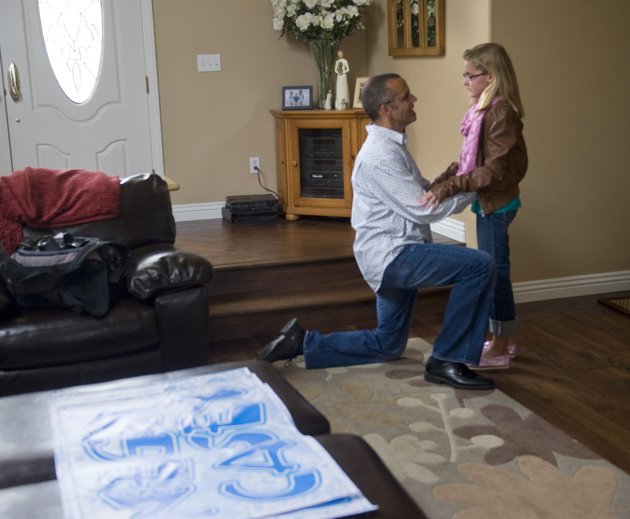
In this April 13, 2011 photo, Stacey Rees, right, tries to keep daughter Jessica upbeat as they get ready to take a limousine ride to an "American Idol" taping in Rancho Santa Margarita, Calif. Jessica Joy Rees, 12, who started a blog and a Facebook page to raise awareness about child cancer has died of brain tumors. Her family says Jessica died Thursday, Jan. 5, 2012 after a 10-month battle with cancer. Jessica Rees began her blog after she became sick in March. Her Internet posts described her feelings and urged her readers to pray for other children with cancer. (AP Photo/Orange County Register, Ana Venegas) MAGS OUT; LOS ANGELES TIMES OUT

A Southern California girl who became a nationally recognized face of child cancer with a blog that chronicled her fight against brain tumors has died. Jessica Joy Rees was 12 years old. Jessica's family announced her death on her Facebook page, stating that her 10-month battle with brain cancer ended Thursday. Tens of thousands of people responded by posting updates to the page in a show of support that includes "likes" and prayers. By Friday afternoon the outpouring surpassed Jessica's goal to get one "like" for each of the estimated 50,000 American children with cancer. The Orange County seventh-grader, called "Jessie" by family and friends, began her blog and Facebook page after being diagnosed with an inoperable brain tumor in March. A second tumor was discovered in September.

While some of her posts discussed her struggles as she underwent radiation and chemotherapy treatments, others urged readers in dozens of countries to support pediatric cancer research and to pray for other children with the illness. She always signed her posts with the acronym "NEGU" (NEE'-goo), short for "never ever give up." Also, she and her parents started The NEGU Foundation, a nonprofit organization to raise awareness of pediatric cancer, support sufferers and raise money for research. The foundation sold and provided thousands of "JoyJars" stuffed with candy and toys to sick children. More than 3,000 were sold and distributed in 27 states last year, according to the NEGU website.

After her diagnosis, Rancho Santa Margarita youngster received tickets to "American Idol" and arrived with signs that read "NEGU Casey" to support contestant Casey Abrams, the Orange County Register (http://bit.ly/yJwyF3) reported. Co-host Ryan Seacrest also allowed her to announce country singer, and eventual winner, Scott McCreery. Jessica wrote on Facebook that her mission was "to encourage kids fighting cancer to Never Ever Give Up by spreading hope, joy and love. A cheerful heart is great medicine." A celebration service was scheduled for Wednesday at the Saddleback Church in Lake Forest, where her father, Erik Rees, is a pastor.


In this April 13, 2011 photo, Pastor Erik Rees of Saddleback Church, gives his daughter Stacey Rees, right, a pep talk as they get ready to take a limousine ride to an "American Idol" taping in Rancho Santa Margarita, Calif. Jessica Joy Rees, 12, who started a blog and a Facebook page to raise awareness about child cancer has died of brain tumors. Her family says Jessica died Thursday, Jan. 5, 2012 after a 10-month battle with cancer. Jessica Rees began her blog after she became sick in March. Her Internet posts described her feelings and urged her readers to pray for other children with cancer. (AP Photo/Orange County Register, Ana Venegas) MAGS OUT; LOS ANGELES TIMES OUT

'If Fred Got Two Beatings Per Day…' Homework Asks


By Olivia Katrandjian | ABC News

Third graders in in Gwinnett County, Ga., were given math homework Wednesday that asked questions about slavery and beatings. Christopher Braxton told ABC News affiliate WSB-TV in Atlanta that he couldn't believe the assignment his 8-year-old son brought home from of Beaver Ridge Elementary school in Norcross. "It kind of blew me away," Braxton said. "Do you see what I see? Do you really see what I see? He's not answering this question." The question read, "Each tree had 56 oranges. If eight slaves pick them equally, then how much would each slave pick?" Another math problem read, "If Frederick got two beatings per day, how many beatings did he get in one week?"

Another question asked how many baskets of cotton Frederick filled. "I was furious at that point," Braxton said. "This outrages me because it just lets me know that there's still racists," said Stephanie Jones, whose child is a student at the school. "Something like that shouldn't be imbedded into a kid of the third, fourth, fifth, any grade," parent Terrance Barnett told WSB-TV. "I'm having to explain to my 8-year-old why slavery or slaves or beatings are in a math problem. That hurts." "In this one, the teachers were trying to do a cross-curricular activity," Gwinnett County school district spokeswoman Sloan Roach said. Roach said the teachers were attempting to incorporate social studies into math problems. "We understand that there are concerns about these questions, and we agree that these questions were not appropriate," she said.

Colorado Student Banned from Yearbook Over Racy Photo


By Katie Kindelan | ABC News Blogs

A Colorado teenager whose yearbook picture was rejected for being too revealing is vowing to fight the ban with her high school’s administration, but the editors of the yearbook insist it was their decision alone on the photo. The five student editors of the Durango High School yearbook in Durango, Col., told the Durango Herald they were the ones who made the call not to publish a picture of senior Sydney Spies posing in a short yellow skirt midriff and shoulder-exposing black shawl as her senior portrait. “We are an award-winning yearbook. We don’t want to diminish the quality with something that can be seen as unprofessional,” student Brian Jaramillo told the paper on Thursday.

Spies was joined by her mother, Miki Spies, and a handful of fellow Durango High students and alumni in a protest outside the school Wednesday after, she said, administrators informed her the photo would not be permitted because it violated dress code. “I feel like they aren’t allowing me to have my freedom of expression,” Spies told the Herald.  ”I think the administration is wrong in this situation, and I don’t want this to happen to other people.” The five editors, who said their decision was unanimous, said Spies’ blame was misplaced, in both targeting the administration, and believing that it was a dress code issue.

They also offered her an opportunity to include the photo in the yearbook, just not as her senior photo. “If she (Spies) chooses to, the picture will run as her senior ad, not her senior portrait,” Trujillo said. Despite the clarification from her peers into how and why the decision was made, a meeting Spies initiated between herself, her mother, and the school’s principal, Diane Lashinsky, was held today as planned. “The editors all turned their backs on me and changed their minds,” she told the Herald. “I really do feel like they were intimidated by the principal.”

Neither Spies nor the school responded to ABCNews.com‘s requests for comments today on the meeting’s outcome. The Durango School District, which oversees the high school, issued the following statement to ABCNews.com “The editors of Durango High School’s yearbook informed a senior student in December that her photo in question would not be included as a senior portrait in the yearbook and asked her to submit a replacement.   Durango School District 9-R’s administration supports this decision.” Prior to today’s meeting, the Spies family told local media they planned to meet with a civil lawyer in Denver to review their daughter’s case.

Monday, 2 January 2012

Three Ways Steve Jobs Made Technology Cool, Stylish and Accessible


​This morning I was scheduled for a conference call with one of my clients and I knew I was running a few minutes late. My laptop was not with me and I didn't know the client's email address by heart. Fortunately, I had my iPhone. I opened it up, found a recent e-mail exchange between myself and my client, copied the e-mail address into the mail software and e-mailed them I was running late. Problem solved. As soon as I did this, I realized that Steve Jobs made this happen. He didn't invent e-mail or even the concept of the smart phone. But he did make that technology accessible to the average person and that changed everything.

When the Macintosh computers were first introduced, they were met by the computing community mostly with bemusement. They were often called "toys" because of their easy-to-use graphical interface. Before that, computers had primarily been the domain of nerds and business. No normal person had ever thought of the computer as fun or something that would make their lives easier. Quite the contrary, they were things you used at the office to do data entry or do calculations; things you went home to avoid.

Jobs understood that computers were something we all should be able to use without a degree in computer science. It's ironic considering the elitist label that has followed Apple for many years that, in effect, Jobs was a populist. He took what was difficult to use and made it easy. He forced computer companies to recognize that the masses didn't care about how it worked; they only cared that it did.

3. Form Over Function

When the iMac was introduced -- that multi-colored, plastic bubble -- computer experts scoffed. "What idiot would care about how their computer looked? They are for complex calculations not for home decor!" Yet, people did care. Computers were finally becoming part of every household and the big, gray tower was an eyesore that had furniture companies designing desks that hid them away. Giant credenzas were built to encase your massive, off-white monitor in a shroud of secrecy.

Then came the iMac and computers got style.

Virtually every computer and computer device since has been focused, at least in part, on the way it looks. As these machines became a greater part of our daily lives, they occupied more prominent space in our homes and offices, places we want, vain as it may be, to look nice. Jobs convinced us that computers could be more than just a functional requirement, they could be a stylish accessory.

2. The Populism of Accessibility

But, the reason people have computers is not as a conversation piece. People own computers to use. Once the world wide web came into existence and the world shifted from mail to e-mail, from Yellow Pages to Google, computers began to tumble out of the domain of nerds and into the everyday lives of the rest of us. Jobs understood that the way to hasten this transition -- and open up a market that exponentially increased the number of potential customers -- computers and technology, in general, needed to be easier to use.

The Apple operating system did that. Think for a moment of all the things the graphical user interface (GUI) we now use every day on both PCs and Macs does we take for granted. We mouse-click on things that once required command code. We can copy and paste text, images and files in between complex software programs. We can drag and drop virtually anything.

All of this is controlled by millions of calculations that run quietly behind the scenes while we type away furiously, looking at a pretty, bright screen populated with images and icons we've come to recognize and use daily. The GUI is virtual shorthand. Without it, we would all need to be code experts.

Jobs went further and convinced us we needed all of this stuff on the go. He took what had been a business-friendly, but complicated smartphone and created the iPhone changing the way we the phone. Not only does it work well, it syncs data and allows us to do things we've never done before -- like locate a client email to let them know you'll be late for a meeting.

Suddenly, computers had gone from your desktop to your laptop to your pocket.

1. The Power of Cool

And, let's be honest, that's pretty damn cool. As a kid back in the stone ages of the `70s, I used to carry records to friends' houses whenever we wanted to listen to music. I would choose a dozen or so of the bulky vinyl discs and hope that was all we wanted to hear. Now, I can take my whole damn record collection anywhere I want on a device the size of a credit card.

That is the power of cool and no one in the technology industry harnessed that as well as Jobs. He turned boring software developer conferences designed for geeks into rock concerts watched by millions. He was the ringmaster and we ooh'ed and ah'ed at his announcements like we were watching a high-wire act.

He used this platform to deliver the message that technology can look good, be easy to use and, above all else, be really, flipping cool. Before Jobs, technology companies didn't really understand the influence popular culture wielded over the world and young people in particular. They were busy churning out boxes and touting gigabytes and RAM and processing speed while Jobs was holding an address book, a dictionary, an entire e-mail database, GPS maps, thousands of songs and diverse software applications we would all just call "apps" in a device about the size of a deck of cards. Hard to compete with that.
---
None of this takes into account how he revolutionized the delivery of music, how he re-invented animation, how he convinced us we don't need cables to connect our technology or floppy discs and CDs to store our data and how he made another "toy," the iPad, the future of personal computing.

His contributions to technology are far too many to list in a blog post. Suffice it to say, he changed the way we work, the way we communicate and the way we see computing. Because technology is such an important part of most of our everyday lives, he changed how we live in ways that are hard to calculate. As some have been want to re-tweet on Twitter, he was our generation's Edison and, like Edison, the world is better because of Steve Jobs.

Credit to : http://digg.com

Elton John wants Timberlake to play him in biopic


Elton John is working on a biopic about himself and would like Justin Timberlake to take on the lead role, he said in an interview published Sunday. The British veteran star also spoke about his and partner David Furnish's love for their son Zachary -- whose first birthday was on Christmas Day -- saying the child was the "light of our lives." An announcement about the biopic is due very soon, the 64-year-old told the Los Angeles Times newspaper. "That's very much in the works. We're making an announcement about that very, very soon. We have a director on board, and then it's just going to be a matter of getting the script exactly the way we want it," he said.

Lee Hall, who wrote megahit "Billy Elliot," has written the screenplay, he said, adding they will soon start trying to cast and plan production. On who will play him, he said: "I don't know. I've got a wish list of people. No. 1 on my wish list is Justin Timberlake, because he played me before in a David LaChapelle video of (Elton classic) 'Rocket Man' and was superb." The film will be a "jukebox musical" with possibly a couple of new songs, he said. "It's going to be a surreal look at my life, and not just a factual look at my life... I just don't want it to be a normal biopic because my life hasn't been like that," he added.

The singer -- who is nominated for a Golden Globe on January 15 for his song "Hello, Hello" from the film "Gnomeo & Juliet," will be back in the studio soon to record a new album -- but insisted his days as a top-40 pop star are over. "As Elton John, my days on pop radio are over, and I know that and I accept it and I'm not unhappy about it. It's a different time of my life now, and it gives me the freedom to do whatever kind of music I want to do," he said. He also paid tribute to Lady Gaga, with whom he duets on "Hello, Hello," saying: "I was kind of like that at the beginning of my career. I dressed outrageously, and I didn't care about boundaries."


The star, who has homes in Los Angeles, Britain and the south of France, said the Christmas just gone was special as he and Furnish celebrated the first birthday of their son Zachary, born to a surrogate mother on December 25, 2010. "I love him so much. It's a different kind of love for your child than you have for your partner. Everyone kept saying that, and now I realize that, having had Zachary," he said. "He's the light of our lives. I've had an amazing professional life, personal life, but at 64 to have a son who gives us that much love and enjoyment is, 'Wow!'"

Swedish woman finds wedding ring after 16 years, on a carrot


A Swedish woman who lost her wedding ring 16 years ago was flabbergasted when she found it again, around a carrot growing in her garden, media reported Saturday. Lena Paahlsson had taken off the white gold ring before a Christmas baking session with her daughters in 1995, but it had disappeared from the kitchen counter where she placed it. After looking everywhere, and even pulling up floorboards in the search, Paahlsson and her family, who live on a farm in northern Sweden, had given up on seeing the ring again, she told the Dagens Nyheter daily.

That was until October this year, when she was picking the last carrots in her garden and suddenly found one with her ring glimmering around it. The family thinks the ring must have fallen into the sink back in 1995 and been mixed with potato peels that were composted or fed to the sheep, since all the soil in the garden comes from composted vegetables and sheep dung. The ring no longer fits Paahlsson, but she told Dagens Nyheter she plans to have it enlarged. "I had given up hope. Now that I have found the ring again ... I want to be able to use it," she said.

The 10 Most Ridiculous Lawsuits of 2011

LiveScience.com


We've all heard about crazy lawsuits and 2011 was no exception when it came to the filing of frivolous – even ridiculous – lawsuits. A lawsuit by a kidnapper against his victims for not helping him evade police tops the U.S. Chamber of Commerce's Institute for Legal Reform’s (ILR) survey of the Top Ten Most Ridiculous Lawsuits of 2011, released today. "While these lawsuits vary from the outrageous to the humorous, abusive litigation is hardly a laughing matter," said ILR President Lisa Rickard. "ILR's annual poll of ridiculous lawsuits helps to remind us that abusive lawsuits affect real people and real businesses, and can have harmful results to lives, jobs, and even our economic growth."

ILR announced the top ten vote-getters from among those chosen throughout the year by visitors to the FacesOfLawsuitAbuse.org website. The lawsuits were selected from those featured in the website's monthly polls for 2011. The Faces of Lawsuit Abuse campaign is ILR's public awareness effort created to highlight the impact of abusive lawsuits on small businesses, communities, and individuals.

The top ten Most Ridiculous Lawsuits of 2011 are:

1. Convict sues couple he kidnapped for not helping him evade police
2. Man illegally brings gun into bar, gets injured in a fight, then sues bar for not searching him for a weapon
3. Young adults sue mother for sending cards without gifts and playing favorites
4. Woman disagrees with store over 80-cent refund, sues for $5 million
5. Mom files suit against exclusive preschool over child's college prospects
6. Man suing for age discrimination says judge in his case is too old
7. Obese man sues burger joint over tight squeeze in booths
8. Woman sues over movie trailer; says not enough driving in "Drive"
9. Passenger's lawsuit says cruise ship went too fast and swayed from side to side
10. Mother sues Chuck E. Cheese – says games encourage gambling in children

Cops: Man tried to use $1M bill at NC Walmart


Do you have change for a million-dollar bill? Police say a North Carolina man insisted his million-dollar note was real when he was buying $476 worth of items at a Walmart. Investigators told the Winston-Salem Journal (http://bit.ly/u7ZrEN ) that 53-year-old Michael Fuller tried to buy a vacuum cleaner, a microwave oven and other items. Store employees called police after his insistence that the bill was legit, and Fuller was arrested. The largest bill in circulation is $100. The government stopped making bills of up to $10,000 in 1969. Fuller was charged with attempting to obtain property by false pretense and uttering a forged instrument. He is in jail on a $17,500 bond, and it isn't clear if he has an attorney. He is scheduled to be in court Tuesday.

The Mainstreaming of Vegan Diets

By By Dennis Thompson
HealthDay Reporter


Vegan diets are considered by some to be extreme, a strict way of eating that exists on the radical fringes of vegetarianism. But today, a growing number of people are giving vegan diets a second look, and nutritionists now believe that a well-thought-out vegan eating plan could be the most healthy way to live for most people. "Properly planned vegan diets are healthy, nutritionally adequate and may provide health benefits in the prevention and treatment of many diseases," said Vandana Sheth, a registered dietitian and nutrition educator in Rancho Palos Verdes, Calif., and a spokeswoman for the American Dietetic Association.

Vegan diets are plant-based and exclude all animal products, even items like milk, cheese and eggs that are allowed in some forms of vegetarian diets. Veganism drew added attention in 2011 from a pair of U.S. notables. Former President Bill Clinton -- long famous for McDonald's runs and barbeque lunches -- announced in August that he had converted to a vegan diet. And domestic doyenne Martha Stewart dedicated an hour-long episode of her TV show in March to the vegan lifestyle. Research has found that people who follow a vegetarian or vegan lifestyle enjoy a number of health benefits, Sheth said. These include:

Lower cholesterol levels.
Lower blood pressure.
A healthier body mass index.
Decreased risk for heart disease.
Decreased risk for cancer.
Better control and prevention of diabetes.

"They don't have to worry about cholesterol because cholesterol is only found in animal products," Sheth said. "And as you would expect, vegan diets are much higher in fiber." Sheth added that research has found vegan diets to be appropriate for people at all stages of the life cycle -- even people at crucial stages, such as growing children, pregnant or lactating women, and highly active athletes. One of the long-standing criticisms of a vegan diet has been that people will miss out on many essential nutrients that are in rich supply in animal products. Nutritionists say that is no longer a serious concern, although people in a vegan lifestyle do need to pay careful attention to their supply of certain nutrients.

Interestingly, protein is not one of the nutrients that vegans need to worry about, even though plants are not the best sources because their proteins do not break down into the full range of amino acids that the human body requires for healthy functioning. "It's true that most plant foods don't contain all the essential amino acids needed by our bodies, while animal proteins do," said Andrea Giancoli, a registered dietitian in Los Angeles and a spokeswoman for the American Dietetic Association. "But a grain plus a bean makes a complete protein. As long as you're getting a variety of those, you are fine -- and they don't need to be consumed at the same time."

Sheth and Giancoli also noted that certain vegan "super foods" like soy products and quinoa have been found to contain proteins that break down all the essential amino acids. "It is absolutely possible to get enough protein from beans, lentils, tofu, soy products and other plant sources like seeds and nuts," Sheth said. "As long as you're getting a varied amount throughout the day, your body can mix it up and get what it needs."  Nutrients that vegans do have to keep careful track of in their diets, according to Sheth and Giancoli, include vitamin B12, a key nutrient in cell metabolism, nerve function and blood production, and calcium, which is needed for healthy bones. Animal products are rich in vitamin B12, and dairy products contain loads of calcium.

However, vegans can get B12 and calcium from fortified cereals and fortified dairy substitutes such as soy or rice milk. "You need to be a smart consumer and read labels to make sure you're buying products that are fortified," Giancoli said. Dark green leafy vegetables like broccoli, collard greens or kale also are good sources of calcium. Vegans also have to make sure they get enough iron, which is essential in the creation of hemoglobin, the protein in red blood cells that delivers oxygen to cells and tissues throughout the body. Again, animal products are much more rich in iron, although plant foods such as dried beans, dark green leafy vegetables and fortified dairy substitutes are good sources.

"Keep in mind that our bodies are able to absorb more iron from food if the meal is also rich in vitamin C," Sheth said. "If you're having spinach, you might have tomatoes or a citrus dressing with it to increase absorption." Omega-3 fatty acids probably represent the greatest nutritional challenge for vegans, the two nutritionists said. Thought to be critical for cognitive function and healthy cardiovascular function, omega-3s appear in large amounts only in fatty fish such as salmon -- a dietary no-no for vegans. Some plant sources -- flaxseeds, soybeans, pumpkin seeds and walnuts, for example -- contain a type of omega-3 fatty acid, but it's not the same type found in fish and has not been proven to have the same level of health benefits, Giancoli said.

"There's some concern that vegans may be missing out," she said. Finally, vegans need to keep in mind that it's just as easy for them to indulge in an unhealthy diet as it is for omnivores, Sheth said. She recommends that her vegan clients follow the federal government's "My Plate" guidelines for eating, the same as everyone else should. "You're basically just replacing the protein source," Sheth said. "Otherwise, it's the same meal."

Persistence Is Key to Losing Weight and Keeping It Off

HealthDay


Losing weight is one of the most common New Year's resolutions, but changing long-held behaviors is a skill in itself, a medical expert says. To shed unwanted pounds and keep them off, people have to be ready to face some setbacks and keep on trying, said Dr. Jessica Bartfield, an internal medicine and medical weight-loss specialist at Gottlieb Memorial Hospital, part of the Loyola University Health System. "People need a motivation to lose weight and the new year is an opportunity to start fresh," Bartfield said in a Loyola news release. "Behavior change is the cornerstone of healthy, successful weight loss and it takes about three months to establish a new behavior," she pointed out.

"When you learn to ride a bike, you expect that you will fall down a couple times and are prepared to try again and get back on; you need to have the same expectation with weight loss and to plan accordingly," she explained. Only 20 percent of Americans who've tried to lose weight will keep the weight off after one year, according to the U.S. Centers for Disease Control and Prevention. Bartfield offered the following tips to help reverse this trend and help people achieve and maintain their weight-loss goals:

Don't skip breakfast.

"Eating within one hour of awakening can boost your metabolism up to 20 percent for the rest of the day," Bartfield said. "Eating something is better than eating nothing, but ideally try to incorporate protein for longer-lasting fuel."

Have a weekly weight check.

"Monitoring your weight on a weekly basis provides a fairly accurate weight trend and, more importantly, an early detection of any weight regain, which allows you to adjust behaviors accordingly," Bartfield said.

Exercise for one hour every day.

"Snow shoveling, vacuuming, taking the stairs -- you don't have to run like a hamster on a wheel for 60 minutes. Take three 20-minute brisk walks, or compile the one hour based on a series of activities," she advised.

Limit TV to fewer than 10 hours each week.

"Many argue they don't have time to exercise, but when I ask them to count the hours they spend watching TV or surfing the Net, they are able to find the time for activities where they are moving instead of sitting," Bartfield said.

Keep track of your physical activity.

"Park your car farther away, take the stairs, manually change TV channels -- these are all simple ways to get more physical activity and you need to write them down as they are performed to keep yourself honest," Bartfield said. "Also wearing a pedometer can help accurately document and track your progress."

Keep track of calories.

Do not underestimate how many calories you consume at each meal.

Set clear, realistic goals.

Avoid setting vague goals. Objectives need to be specific and attainable. People can start by trying to lose 10 percent of their body weight, Bartfield recommended.

Be consistent.

"Eat at regular intervals seven days per week," Bartfield advised. "Being 'good' on the weekdays and then splurging on the weekend creates a harmful cycle that discourages weight loss."

Plan for setbacks.

"When you learn to drive, or learn a sport or musical instrument, you make mistakes and you have an experienced instructor -- maybe even several -- to help correct the mistakes and prevent repeats. Enlist a trusted friend, or enroll in a program to learn and master the rules of weight loss," Bartfield said.

When it comes to teenagers who need to lose weight, parents should get involved. "Treating child and adolescent obesity needs to be a family effort; families need to change behaviors," she said. "Research shows that families -- and even couples -- who change behavior together are the most successful."

South Korea says 'new era' possible for Koreas

By FOSTER KLUG and HYUNG-JIN KIM | AP


South Korea's president urged North Korea on Monday to embrace a "new era" by using its recent leadership change as an opportunity to transform Korean ties, as Seoul signaled its willingness to work with Pyongyang's new leader. Lee Myung-bak is reaching out to the late Kim Jong Il's young son as he takes power as supreme commander of the North's military and ruling party leader after Kim's death last month. Lee, however, also warned that Seoul would respond sternly to any North Korean provocations. Lee's comments in a nationally televised speech came a day after the North said in its annual New Year's message that its citizens should turn themselves into "human shields" to defend Kim Jong Il's son, Kim Jong Un, "unto death." Lee said Kim Jong Il's death is "portending a sea change" for the Korean peninsula. "If North Korea comes forward with a sincere attitude, it will be possible for us to work together to open a new era," he added.

North Korea said last week that it would never deal with Lee, but Kim Jong Un's rise could offer a chance to improve ties that have suffered since Lee took office in 2008 and ended a no-strings-attached aid policy toward the North. The young Kim had a brief meeting in Pyongyang late last month with a former South Korean first lady and a business leader who were leading private mourning delegations to pay respects to Kim Jong Il. Lee said the Korean peninsula is at a turning point and "new opportunities always emerge amid such changes." However, he also said Seoul would "maintain a watertight defense posture" to deal with the possibility of North Korean provocations. "If any aggression occurs, we will strongly respond," Lee said. In 2010, 50 South Koreans died in attacks blamed on the North, though the Koreas have met in recent months for preliminary nuclear discussions.

North Korea, which has tested two atomic devices since 2006, has said it wants to return to long-stalled six-nation talks on halting its nuclear weapons program in return for aid. Washington and Seoul, however, have insisted that the North first show progress on past disarmament commitments. If North Korea halts its nuclear activities, Lee said in his speech, negotiations could resume. "We are ready to resolve security concerns on the Korean peninsula and provide assistance to revive North Korea's economy through agreements in the six-nation talks," Lee said. Meanwhile, North Korea's propaganda efforts to build up Kim Jong Un continued Monday, with state TV showing footage of him dressed in a dark overcoat and laughing with officers as soldiers applauded during a field inspection Sunday. State TV also played a song widely associated with Kim Jong Un — "Footsteps," a reference to his carrying out his family's legacy.

North Korea's New Year's message Sunday didn't include the country's routine harsh criticism of the United States and avoided the country's nuclear ambitions, a sign the North may be willing to continue talks with Washington to win food aid. North Korea repeated a call in the message for implementing past agreements for the Koreas to cooperate on potentially lucrative economic projects. Although North Korea has left open the possibility of better ties with the South, it hasn't tempered its antagonism toward Lee. On Monday, it accused Lee of plotting to shake up the North by temporarily placing his troops on high alert after Kim Jong Il's death. The North's main Rodong Sinmun newspaper said in a commentary that Lee must "kneel down and apologize" for his acts.

Analysts said Lee is willing to move past North Korea's recent strong words. Lee's speech shows South Korea "has no intention to provoke North Korea," said Cheon Seong-whun, an analyst with the Korea Institute for National Unification in Seoul. North Korea has regularly criticized Lee since he took office seeking to link aid to progress in North Korea's nuclear disarmament. The six-nation nuclear talks involve the two Koreas, the United States, China, Russia and Japan. The Korean peninsula remains technically in a state of conflict because the 1950-53 Korean War ended in a truce, not a peace treaty. This year is a crucial one for North Korea as it tries to build a "great, prosperous and powerful nation" befitting the April 2012 centenary of the birth of national founder Kim Il Sung, the new leader's grandfather.